

by John Cylc
August 16th, 2024
In an age where violence and crime are prevalent concerns, many individuals find themselves contemplating their personal safety more than ever before. As someone who was born and raised in Philadelphia, a city that has seen its share of violence and crime, I have grown increasingly aware of the necessity for personal preparedness. This awareness has been shaped by my experiences and observations over the years. In this context, I want to share with my family and friends a set of guidelines that I believe are essential for ensuring personal safety.
I made a meme quite a few years ago that I have seen at various times on social media sites. Here it is:
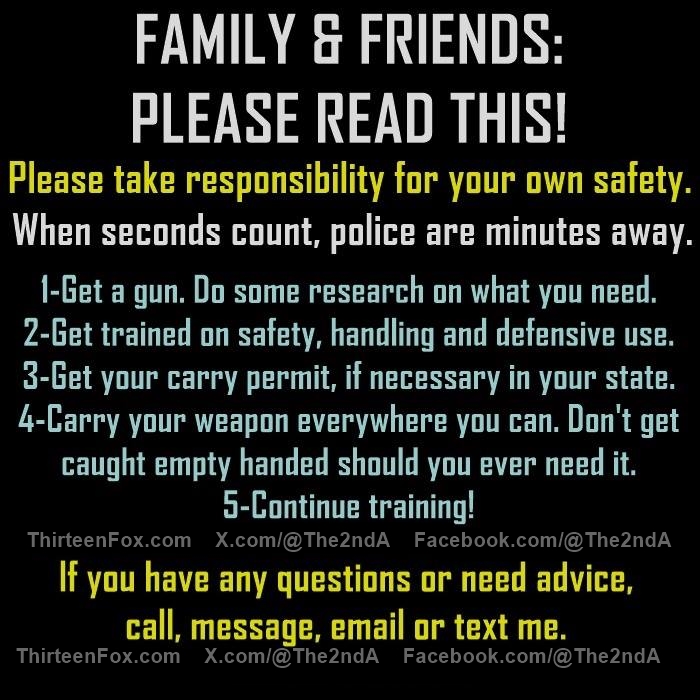
That is simplified but I wanted to break it down to add some detail.
The first step in preparing for potential threats is to obtain a firearm that meets your needs. It is crucial to conduct research to understand the various types of firearms available, their features, and their suitability for personal defense. Factors such as caliber, ease of handling, and reliability should be considered. Consulting with experts and professionals can provide valuable insights into selecting the right firearm. Remember, this is not just about owning a weapon but about making an informed decision that aligns with your personal safety requirements.
Merely owning a firearm is insufficient without the knowledge and skills to use it safely and effectively. Enroll in professional training courses that focus on firearm safety, proper handling, and defensive tactics. Training programs offered by certified instructors should equip you with the necessary skills to handle a firearm responsibly and use it effectively in high-stress situations. Understanding the principles of marksmanship, firearm maintenance, and situational awareness are the primary components of such training.
Depending on your state of residence, carrying a concealed weapon may require obtaining a permit. Research the legal requirements in your area and ensure that you comply with all necessary regulations. Applying for and acquiring a carry permit not only legalizes the carrying of a firearm but also demonstrates a commitment to responsible firearm ownership. Familiarize yourself with local laws and regulations regarding firearm carry to avoid legal complications and ensure you are fully compliant.
Once you have obtained your firearm and necessary permits, it is important to carry your weapon consistently and responsibly. The principle behind this is to ensure that you are always prepared should a situation arise where self-defense becomes necessary. However, carrying a firearm comes with responsibilities, including ensuring that it is properly secured and concealed when not in use. Adhering to these practices will help you avoid unnecessary legal issues and maintain a high level of preparedness.
I must address the argument from the firearm community about “open carry”, which is (as it states) carrying your firearm for all to see. I do not want to get into the whole argument of open vs. concealed, but I will give my opinion. Any “bad guy” intent on committing a crime, will target the biggest threat first. I would rather play the weak non-threat until such a time as needing to act. Getting away safely and without incident, so long as there is no physical threat to yourself or others, should be the priority.
Personal safety and firearm proficiency are not static goals but require continuous improvement. Regularly training will help you stay updated on the latest techniques, enhance your skills, and reinforce safe handling practices. Continuous training ensures that you remain proficient and confident in your abilities, which is crucial for responding effectively in emergency situations.
Consider pursuing advanced training opportunities to further refine your skills. Advanced courses can provide in-depth knowledge on complex scenarios, advanced defensive techniques, and strategies for dealing with multiple threats. This level of training will better prepare you for high-stress encounters and enhance your overall effectiveness in defensive situations.
I would also recommend participating in firearm competitions like IDPA. The community of participants in those events love sharing tips and advice. They also usually let you try out their equipment to show off! Competing will also give you more confidence in your skills.
The motivation behind these guidelines is rooted in a deep sense of responsibility towards those we care about and those who depend on us for safety. Being prepared is not just about personal security but also about honoring the trust and dependence placed upon us by our loved ones. By investing time and effort into understanding and practicing firearm safety, we demonstrate respect for the value of life and our role in protecting it.
Personal preparedness for a threat of violence requires a multifaceted approach involving education, training, and responsible behavior. Acquiring a firearm, obtaining proper training, securing necessary permits, carrying consistently, and committing to ongoing and advanced training are essential steps in ensuring personal safety. This approach not only enhances your readiness but also upholds the responsibility we have towards those who rely on us. Anything less than this level of preparedness would be considered irresponsible and disrespectful to the trust placed in us by our loved ones. In a world where uncertainty is a constant, being ready just in case is not only wise but imperative.

 ThirteenFox.com
Well written and thought out.
LikeLiked by 1 person