
by John Cylc
August 31, 2024
In 2016, when Donald Trump won the Republican nomination for President, the term “populism” suddenly became a bad word. The media often used the phrase “populist candidate” when talking about Trump, and many people started to view populism in a negative light. However, the interesting thing is that the very foundation of our country is rooted in populism. So, why has it become such a denigrated term?
What is “populism”?
According to The American Heritage Dictionary of the English Language, populism is defined as “a political philosophy supporting the rights and power of the people in their struggle against the privileged elite.” This idea closely mirrors the principles laid out in the Declaration of Independence. The Declaration talks about the importance of individual rights and the need for a government that serves the common people, not just a select few.
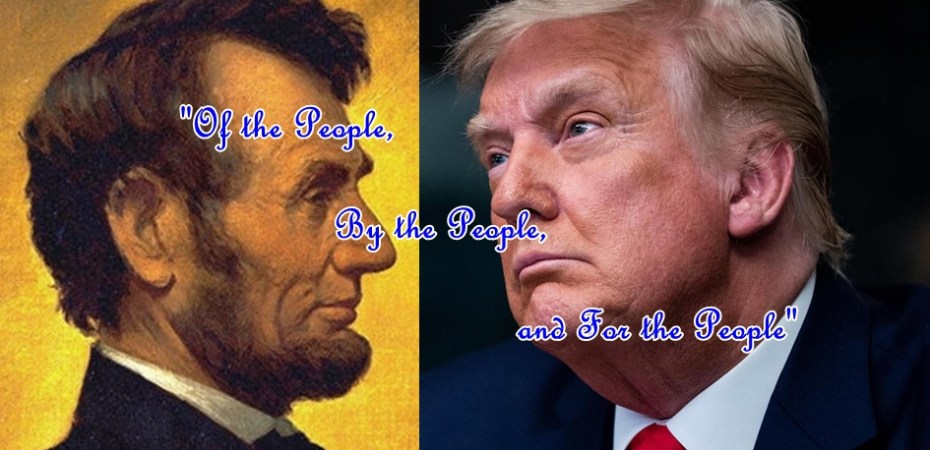
In his Gettysburg Address, President Abraham Lincoln, who was a Republican, famously declared that our government should be “of the people, by the people, for the people.” He expressed hope that such a government “shall not perish from the Earth.” Lincoln’s words reflect the core idea of populism: that the power and rights of ordinary people should be the foundation of our government. It is a concept that was central to the creation of the United States.
Is America still a populist country?
However, over time, it seems that our government has shifted away from these founding principles. Instead of being truly “of the people,” it has become more like a government “of the bureaucracy, by the deep state, and for the elites.” This shift has been exacerbated by a troubling change in the media. Once seen as a watchdog keeping an eye on those in power, the media has increasingly become part of the problem. It has become entangled with the very government it is supposed to scrutinize, often influenced by its own relationships, both professional and personal, with politicians and officials.
“A Republic, If You Can Keep It”
The possibility of Kamala Harris winning the presidency is viewed by some as a threat to important freedoms. People worry that her presidency could negatively impact freedom of the press, social media, and individual rights. Benjamin Franklin’s famous words to a woman outside of Independence Hall— “A Republic, if you can keep it”—underscore the idea that maintaining a free and fair government is a responsibility that falls on the shoulders of its citizens. Franklin’s warning suggests that the survival of the Republic depends on how well people guard their freedoms and hold their leaders accountable. Electing a clearly controlled puppet such as our current Vice-President would be a tragic mistake by the uninformed, easily fooled electorate.
In recent times, some argue that there has been a resurgence of ideas like those held by the Tories during the colonial period, but now embodied by the modern Democrat Party. This comparison highlights concerns that the current political climate might be moving away from the ideals of liberty and self-governance that were foundational to the United States.
A “Team of Rivals” for the Ages
Donald Trump, in this context, represents a challenge to that ideology. He is often seen as an antidote to what many view as a corrupt system. From the moment he took office in 2017, Trump faced immense resistance. Despite being in the Oval Office, he struggled to achieve his goals due to his possible underestimation of the entrenched opposition. Now that Trump has seen the depth of the corruption and the complexities of what some call “the swamp,” he has a clearer understanding of the challenges ahead. Serving his second term, he will be a “lame duck,” unconcerned with re-election or upsetting the proverbial apple cart. He has been attempting and succeeding in uniting a diverse group of people—Democrats, Independents, and Conservatives—whose focus and experience can help address many different, yet equally critical issues. God willing, they will form a modern-day “Team of Rivals,” similar to that of Abraham Lincoln, which will help restore populism and save our country.
In summary, the term “populism” has taken on a negative connotation for some because it challenges the existing political and media systems. However, this concept is deeply embedded in the American tradition and was integral to the country’s founding principles. As we navigate today’s political landscape, it is essential to remember the core values of democracy and ensure that the government remains truly “of the people, by the people, for the people.”

 ThirteenFox.com